
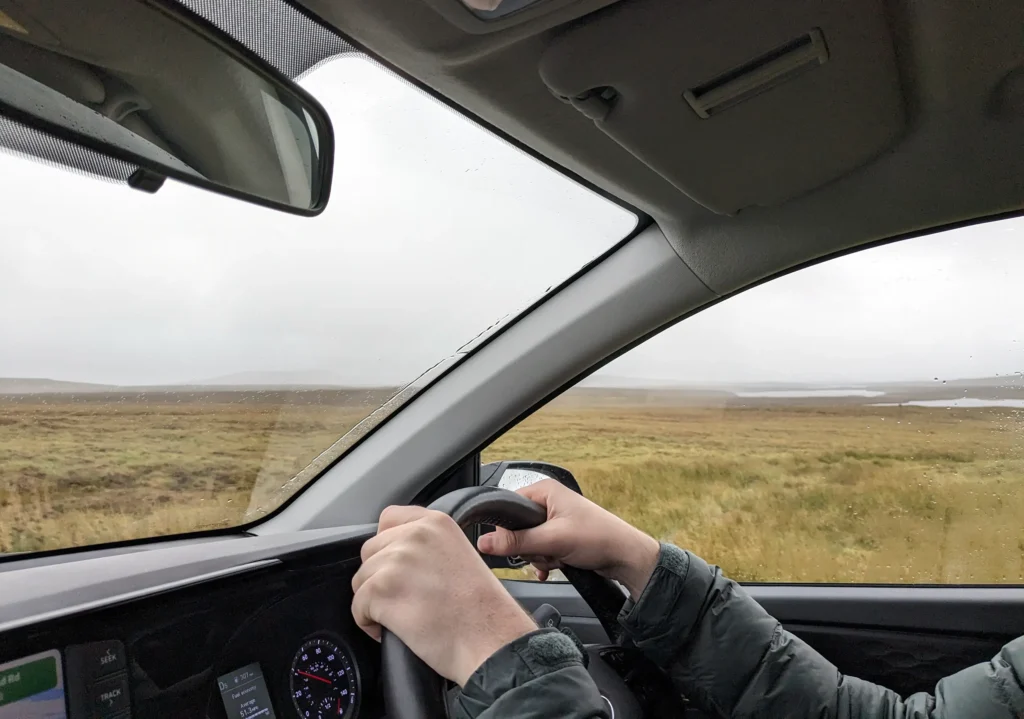
12 helpful tips to make driving in Scotland easy
1. Hiring the right car for Scotland
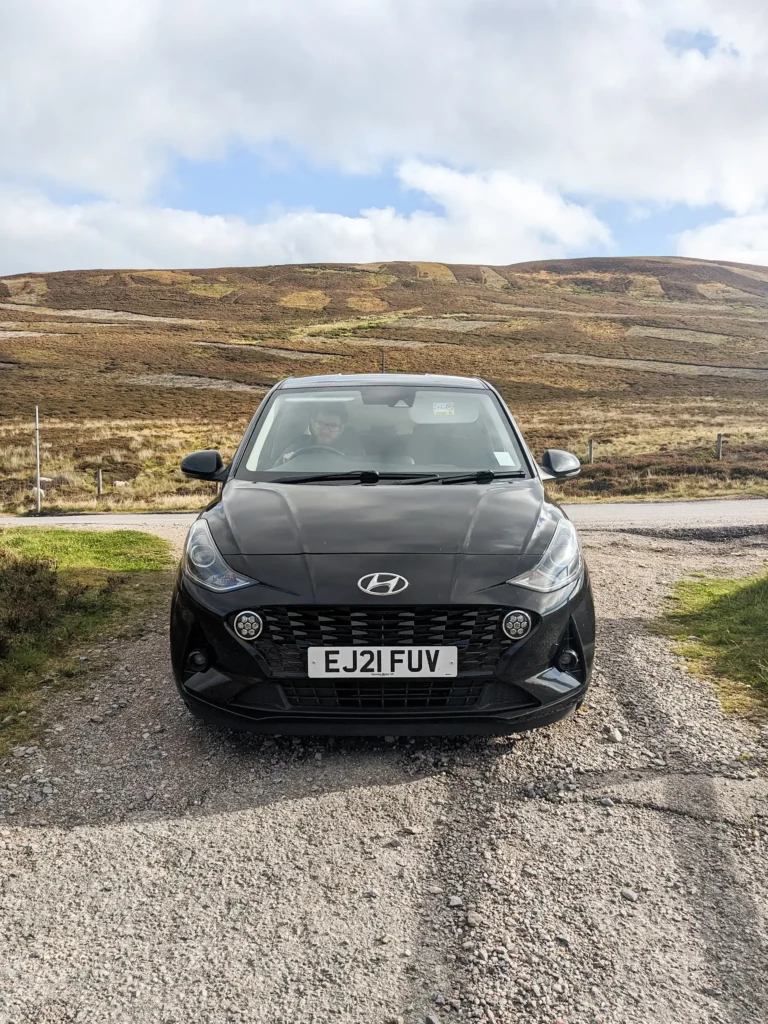
We found renting a car in Scotland to be easy, with both major and local rentals available in all the main cities and airports. Both manual and automatic cars are widely available, though automatics tend to be slightly more expensive. If you’re not comfortable driving a manual, the extra cost for an automatic is worth it, especially since you’ll also be adjusting to driving on the left side of the road. This will just help you feel more confident.
While it depends on the number of people you’re travelling with, I really recommend hiring the smallest car you can. Scotland’s roads (especially in rural areas) are often narrow and some parking spaces at attractions are tight. Our small car was so much easier to handle than the larger vehicles we saw struggling in some spots.
We rented our hire car from Arnold Clark and had a great experience, so they’re definitely worth getting a quote from.
2. Driving on the left side of the road
If you’re used to driving on the right, this will take an adjustment – your instincts will fight you. As Australians, we’re actually used to driving on the left, but having had to drive on the opposite side of the road in Iceland and Greece, I understand how intimidating this can be. For the first few hours, every turn felt slightly surreal, like I was deliberately doing something wrong even though I was doing it right.
Here’s what actually helped us adjust:
The key is to stay focused and keep your attention on the road. We found that driving around other cars really helped – the flow of traffic sort of reminds you which side to stick to. It’s really the single-track roads where you might need to use what I call the ‘left chant.’ Sounds silly, but mentally repeating ‘left’ when making turns or using roundabouts actually works.
Give yourself grace during the first day or so. It feels strange, but I promise it becomes natural quickly.
3. Navigating roundabouts
We found the number of roundabouts in Scotland to be similar to what we’re used to in Australia, but we learnt that this isn’t the case in other countries – particularly the U.S. and Canada. If roundabouts are new to you, they may seem chaotic but once you get the hang of it they’re even easier than a four way stop sign.
I recommend checking out Conquer Driving’s UK roundabout lesson video – it’s great for visually explaining how to handle roundabouts, and it’s much easier to understand when you can see it in action.
Here’s some quick roundabout rules for Scotland:
- Approaching the Roundabout: Slow down as you approach and be ready to stop. Traffic already on the roundabout has the right of way – this is the most important rule to remember.
- Choosing the correct lane:
Left Lane: Use this if you’re taking the first exit (turning left).
Right Lane: Use this if you’re taking the last exit (turning right).
Middle Lane: Use this if you’re going straight ahead. - Using Turn Signals:
Signal Left: When taking the first exit.
Signal Right: When taking the last exit.
No Signal: If going straight, signal only when you’re about to exit. - Exiting the Roundabout: Signal left as you approach your exit to let others know you’re leaving.
- Missed Your Exit?
Don’t worry, everyone’s done this before – just go around the roundabout again until you reach the correct exit.
4. Reading traffic lights in Scotland
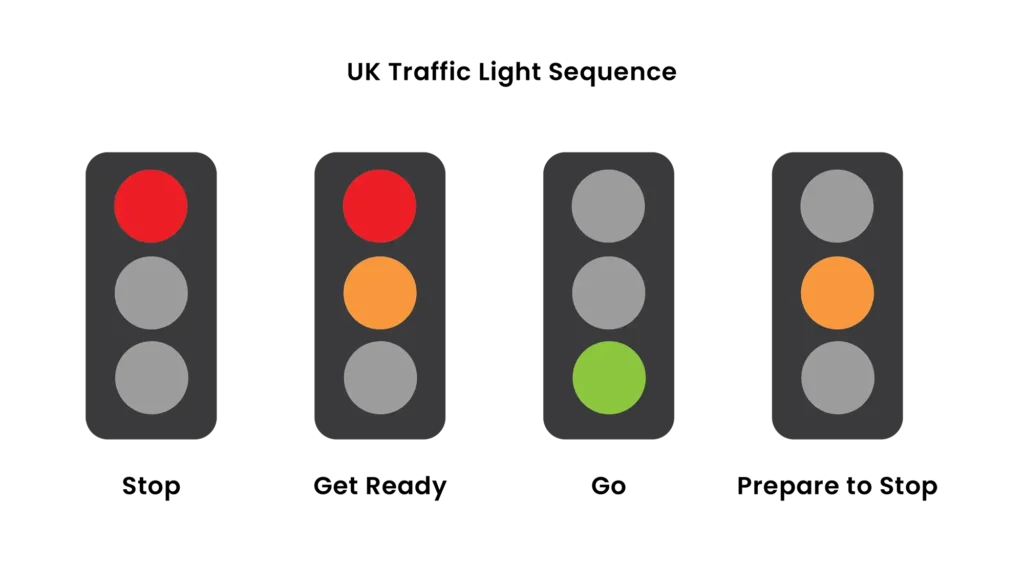
When you first arrive in the UK, you might notice something different about the traffic lights. They have four stages instead of the usual three. Here’s what each light means:
- Red Light: You must stop.
- Red and Amber Together: The light is about to turn green, so get ready to go.
- Green Light: You can go but watch out for other drivers and pedestrians.
- Amber Light Only: The light is about to turn red, so start slowing down and get ready to stop.
Once you understand the sequence, it becomes second nature. The red and amber combination is actually really helpful because it gives you a heads up that you’re about to be able to move.
5. Using single track roads
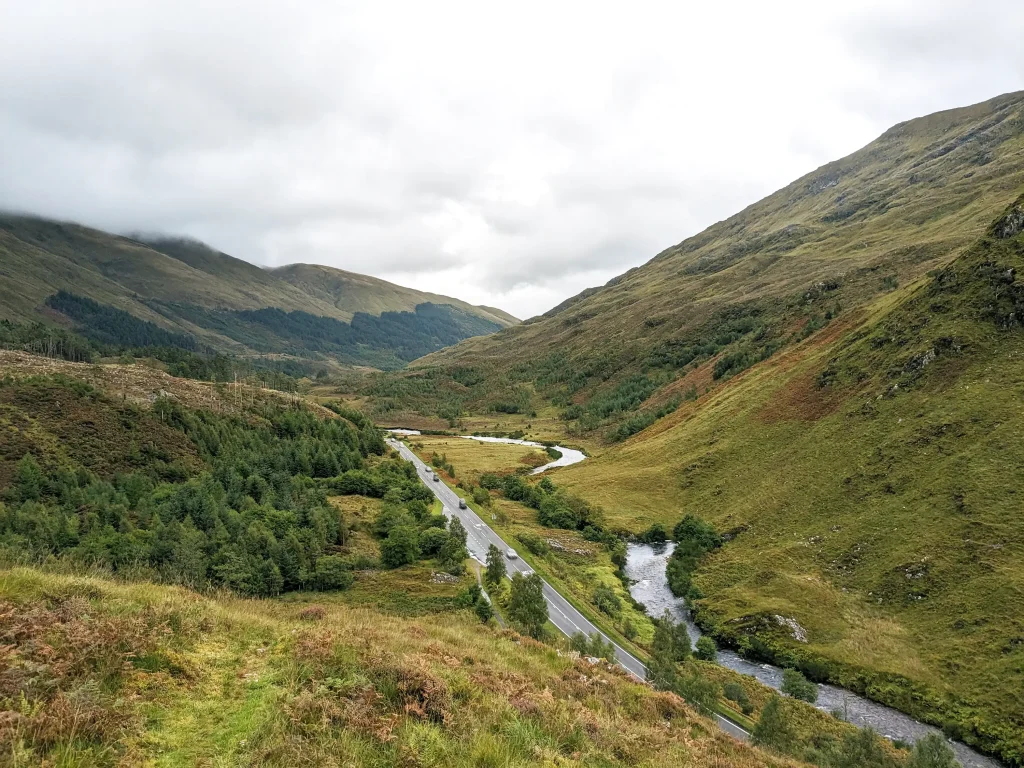
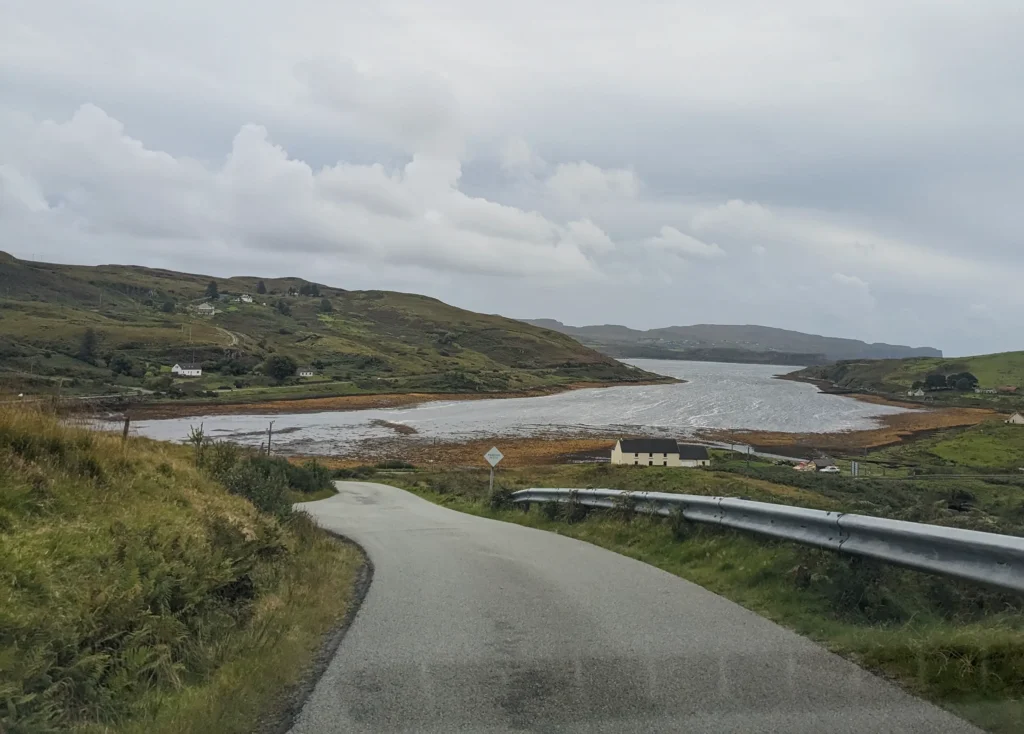
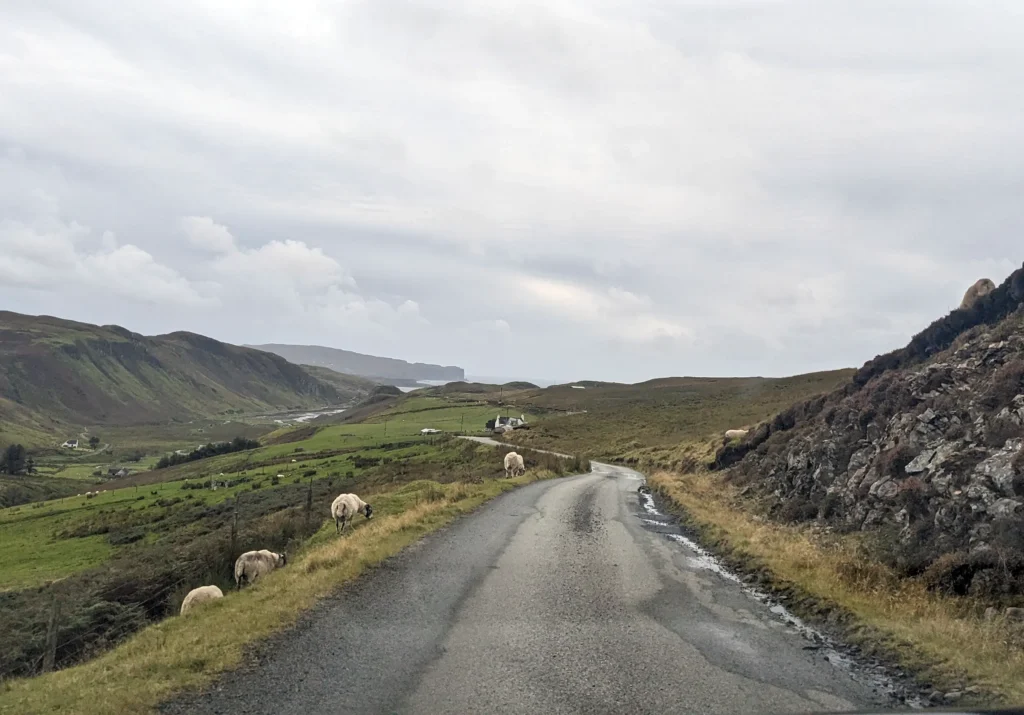
Single-track roads were honestly one of the most intimidating parts of our trip. These narrow roads are found in rural and remote areas and they’re usually only wide enough for one vehicle at a time, meaning there isn’t enough space for two vehicles to pass each other comfortably. There’s no lane markings also because, well there’s only room for one lane.
But what do you do if you meet another car coming the opposite direction? Scotland has a pretty civilised system for this: passing places.
How they work: Single-track roads have designated “passing places” where vehicles can pull over to allow others to pass. These passing places are spaced out along the road and are usually marked with signs on popular roads. Sometimes on quieter roads there won’t be any official signs but you’ll notice worn spots where people regularly pull over.
Driving on single track roads does require you to be extra aware and patient but it sounds more complicated than it actually is and after a few times you’ll feel more confident.
I have written a more in depth guide to using passing places in Scotland if you want to check that out.
6. Driving on damaged/unsealed roads
While most main roads in Scotland are paved, you might come across gravel roads, especially in rural areas. These roads are often less maintained than you’d expect and potholes are pretty common, particularly on the Isle of Skye, where you can see the weather really takes a toll.
Even though we had a small car, we were able to navigate these roads without any damage by simply slowing down and carefully steering around the potholes. Don’t try to power through at speed. Just take it easy, stay alert and you’ll be fine.
7. Fuel stations
Fuel stations are easy to find in cities and bigger tourist towns, but they will be harder to come by in rural areas. If you’re heading into the highlands or remote areas, it’s smart to plan your stops ahead of time.
Google Maps is great for finding fuel stations along your route, including their hours of operation, which is useful when you’re planning your schedule.
Before we left Glasgow and headed into the Highlands, we made sure to fill up our tank. This gave us the peace of mind that we could reach our accommodation with plenty left over in case we took a wrong turn or two (which, let’s be honest, happens). Plus, it saved us money – fuel prices jump quite a bit once you head north into places like Fort William.
During our trip, petrol prices averaged around £1.50 per litre. For the latest prices, it’s worth checking the UK Fleet News website. We also noticed that the cheapest fuel was often at stations owned by supermarket chains like Tesco, Morrisons and Sainsbury’s. This is worth keeping in mind if you’re sticking to a budget.
8. Parking
Like most cities you’ll find that in Edinburgh and Glasgow, and tourist towns like Fort William and Portree, you’ll often have to pay for parking, and finding a spot can genuinely take time. We found that many free attractions, like the Old Man of Storr and the Fairy Pools on Skye, also have paid parking.
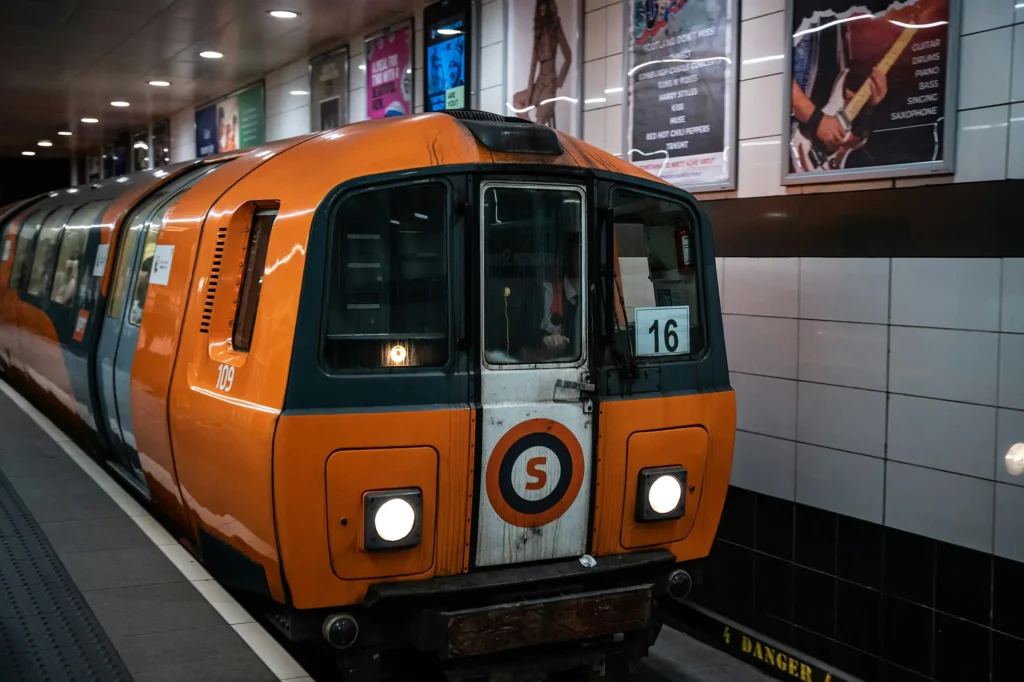
We decided that the time we would use to find a park wasn’t worth the stress in the bigger cities. That’s why we left our car at the hotel in Glasgow (where we had already paid for parking) and used the Glasgow Subway to get around for the day instead.
You’ll usually find a parking kiosk where you can choose how long you want to stay and then place the ticket on your car’s dashboard – this is called ‘pay and display.’ Every kiosk we used accepted both credit cards and cash.
Prices will vary depending on the location and time but over our 9-day trip, we ended up spending £17 on parking – not a huge amount, but enough to cover a meal at a Scottish chippy.
9. Watching for livestock and wildlife
Across Scotland, especially in rural areas and on single-track roads, animals are common road hazards. These animals often roam freely, so it’s not unusual for them to wander onto the road unexpectedly. During our trip we came across herds of sheep and highland cows grazing along the edge of the road. They looked peaceful but could be unpredictable.
Scotland also has some wildlife you may encounter, especially around dawn and dusk when visibility is lower. These include deer, rabbits and red foxes. To avoid accidents you need to stay vigilant and be prepared to stop quickly.
10. Preparing for the weather
Scottish weather is famously unpredictable, and we got to experience it all – sunshine, fog, rain and gale force winds (and all in the space of a two hour hike!) Because of how unpredictable it is, you need to be prepared for driving in all of these conditions (plus snow in the winter if you’re visiting then).
Standard driving practices apply here: stay cautious, slow down when there’s reduced visibility or wet roads and don’t take risks. If the weather does become severe find a safe place to pull over.
We kept our headlights on at all times while driving to help with visibility and make sure others could see us. You’ll find the weather especially unpredictable along coastal and exposed areas, like the Isles, so factor in some extra time for delays if you’re using these routes.
11. Allowing extra travel time
This is a really important tip we learnt: If Google Maps estimates a 2-hour drive from Edinburgh to Inverness, expect it to take closer to 2.5 hours. Sometimes longer. The narrow, winding single-track roads can easily add to your travel time. Plus, Google assumes you’ll be driving at the speed limit, which might be unrealistic if you’re not familiar with the roads or if you’re driving in poor conditions.
It’s worth giving yourself extra time if you’re on a tight schedule. Scotland’s scenery is too beautiful to speed through anyway!
12. Dealing with limited reception
You may not always have cell reception, especially in parts of the Highlands and on the Isle of Skye. We occasionally found ourselves in areas with no signal, causing our GPS to drop out. Although the signal usually came back quickly (so we didn’t have any big problems), it’s worth downloading maps ahead of time if you plan to head off the main roads.
Google Maps actually works without phone service – as long as you input your destination before you lose signal. This was a lifesaver on two occasions.