
Before I get into the tips, here’s our overall approach to money while traveling: we pay for everything we can with our credit card. The reason we prefer credit cards over debit is the protection – if there’s ever a dodgy charge, we can dispute it before the money actually leaves our account, which you can’t do with a debit card.
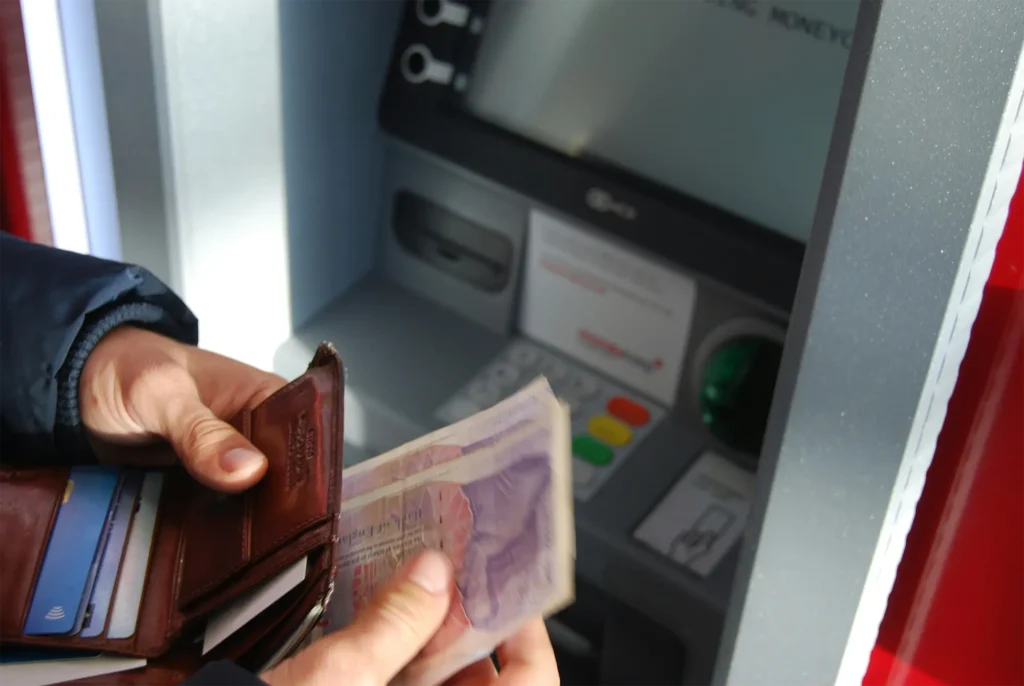
In a lot of European countries like Iceland and England, we haven’t needed to withdraw any cash at all because cards were accepted everywhere. But when you do need to withdraw cash in Europe, here are five easy rules to follow:
In some countries like Iceland and England, cards are accepted everywhere and we’ve gone entire trips without needing cash. But when you do need to withdraw cash in Europe, here are five easy rules to follow.
1. Get a debit card with no international transaction fees or ATM withdrawal fees
Do not use a credit card to withdraw cash. Credit cards treat cash withdrawals as cash advances, which means you’ll be charged high interest immediately plus additional cash advance fees. It’s one of the most expensive ways to get money abroad.
Instead, you need a debit card that doesn’t charge international transaction fees or ATM withdrawal fees. There are different options available depending on your home country. We personally use ING, but Wise also offers 2 free withdrawals on the first $350 per month.
It’s important to know that even with a fee-free card, the ATMs themselves can charge their own fees. They will typically show you the fee before you complete the transaction, so you can decide whether to accept it or cancel and try a different ATM.
2. Only use ATMs attached to local banks
You’ll find a range of different ATMs across Europe. A common one you’ll spot in touristy places is Euronet (typically inside convenience stores or on the street). These ATMs are the worst for conversion fees – avoid them at all costs.
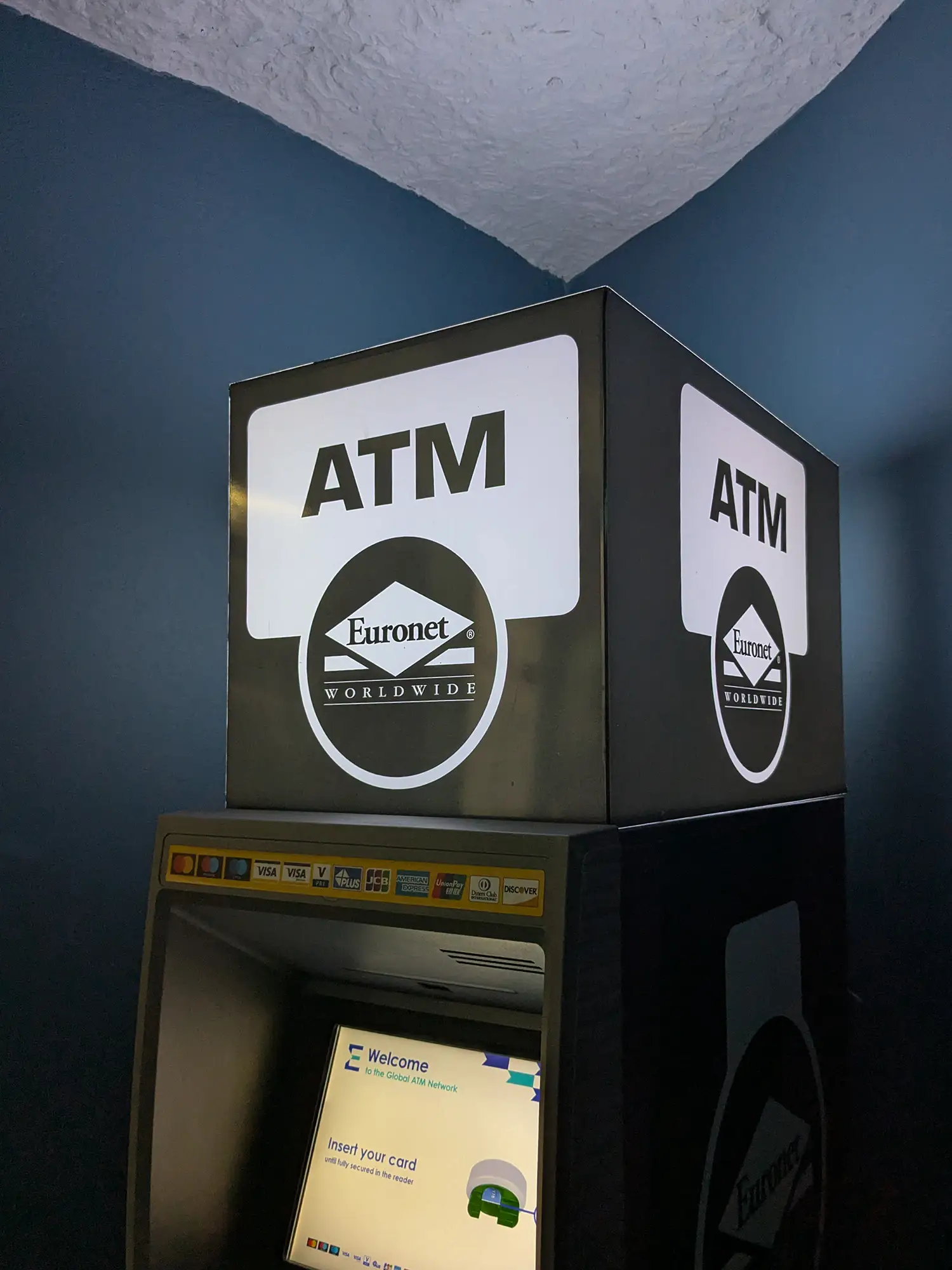
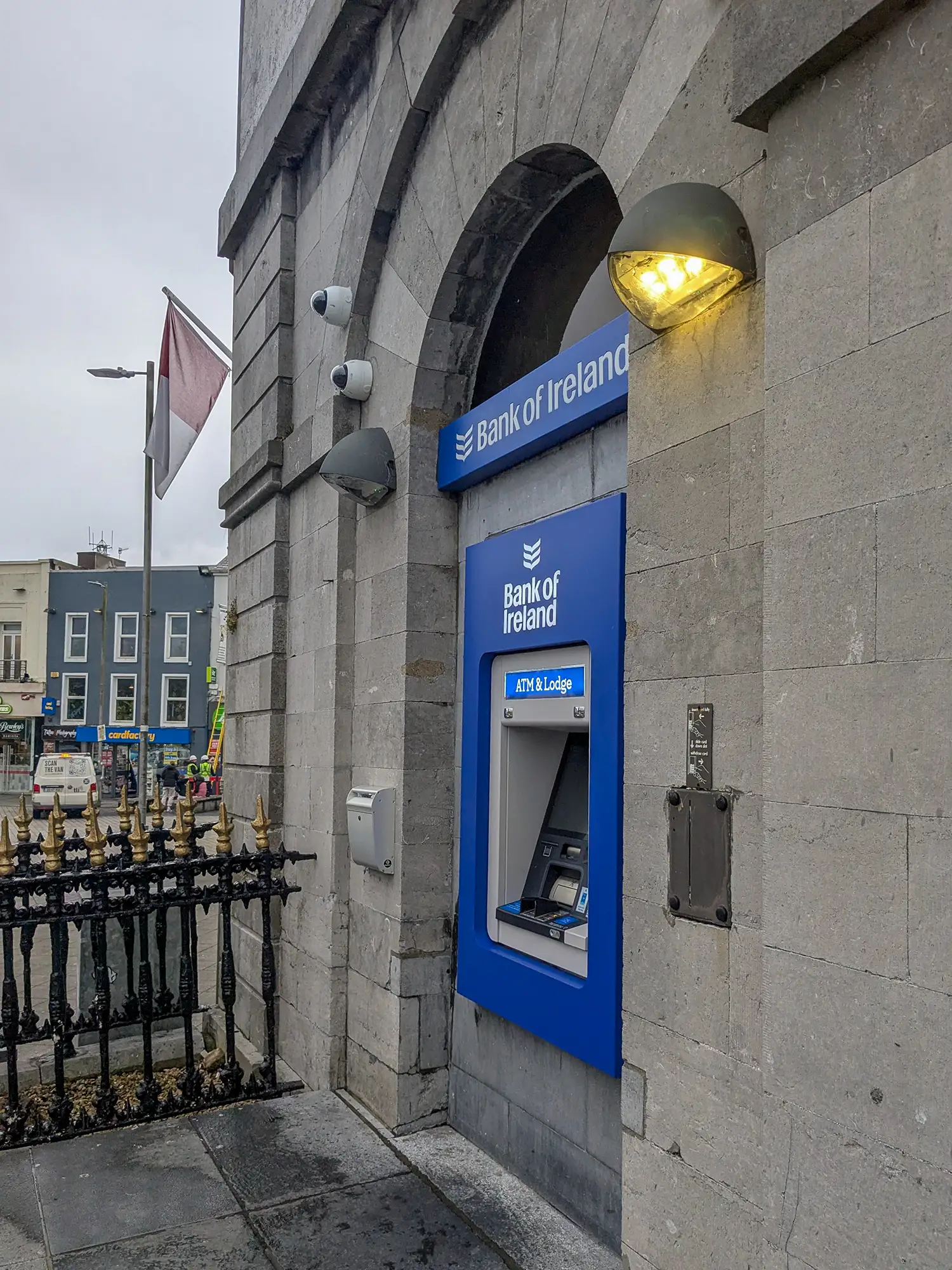
Instead, always look for ATMs attached to actual bank branches. These ATMs are operated directly by banks, which means they use standard interbank exchange rates and typically have lower (or no) ATM fees. Third-party ATMs like Euronet, on the other hand, are run by private companies that make their money by charging these inflated fees and exchange rates.
The easiest way to find a local bank ATM is to search Google Maps for nearby banks then use street view to check if there’s an ATM outside before you walk there. It also helps to research the major banks in your destination before you travel – so you know which names to look for.
3. Don’t use currency exchanges
Currency exchanges are one of the biggest rip-offs you’ll come across in Europe. A lot of them will advertise “no commission” but make their money through terrible exchange rates – often 10-15% worse than what you’d get from your bank. Which means that by the time you’ve exchanged your money, you will have lost a significant chunk of it to fees.
I’ve never used a currency exchange, even when I’ve had leftover currency from another country. If I find myself with extra cash on our last day in a non-euro country (like when we were leaving Krakow and no longer needed Polish złoty) I’ll try to pay for everything I can with cash that day to use it up.
If you have a smaller amount left over, one of the best ways to spend it is at a grocery store. Stock up on snacks for your journey or next destination – you’ll always find a use for them, so you won’t feel like the money is being wasted.
4. Budget how much cash you need so you don’t need to withdraw too many times
The best way my partner and I do this is by always paying for everything with a credit card UNLESS the place doesn’t accept cards. Making sure we only use cash when it’s necessary makes it easier to reduce how often we need to visit an ATM.
It varies by country, but we’ve typically needed cash for small local restaurants and cafes, street food vendors, market stalls, public toilets, and sometimes taxis or public transport in smaller towns.
Generally, €50 per person covers 5 or more days for us. I find it’s enough to avoid constantly hunting for ATMs, but not so much that we’re carrying around excessive cash.
5. Always withdraw in local currency
Even after following all of my other steps above, not withdrawing in the local currency is where many people loose money without realising it.
When you’re at an ATM and it asks if you want to be charged in your home currency, always decline this and select the local currency instead (the currency of whatever country you’re currently in).
It can feel weird to choose 500 Turkish lira when you could choose $27.50 on the screen instead, but if you accept this conversion at the ATM, the ATM operator sets their own exchange rate, which is almost always much worse than what your bank would give you.
They’re essentially charging you extra for the “convenience” of seeing the amount in your home currency on the screen.
By selecting the local currency, you’ll get your bank’s accurate exchange rate instead of the ATM’s inflated one.
Always have backup payment methods
Finally, make sure you’re not relying on just one card. Between my partner and I we always carry two different credit cards and two different debit cards. This allows us to have a backup method if a card gets declined, lost or stolen.
Some important tips:
- Notify your bank you’ll be traveling to avoid security blocks
- Keep backup cards in different locations – not all in the same wallet
- Save your bank’s international contact number in your phone